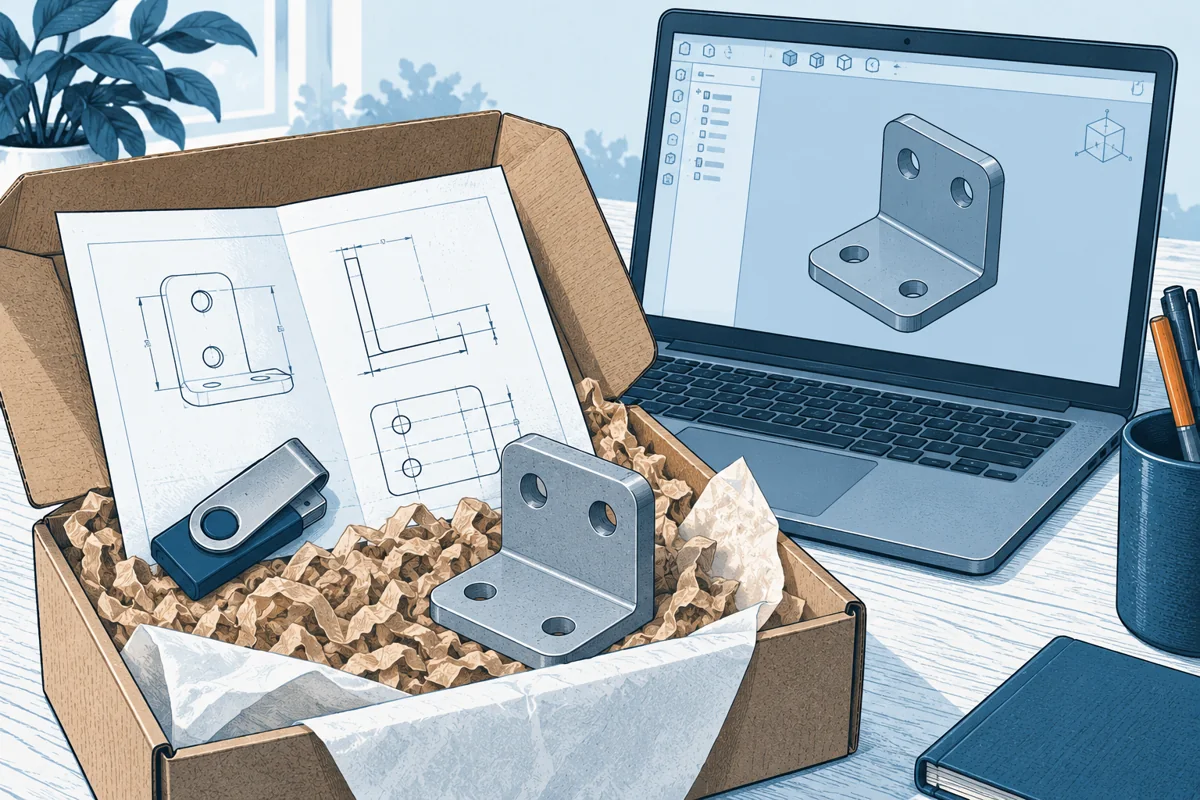
Geometry and manufacturing intent are different information
A three-dimensional model describes shape, but a manufacturer also needs to know which variations are acceptable. A hole may have a function that its shape does not reveal: clearance, a locating fit, or a thread. A surface may require a particular finish because it slides against another part. Those requirements need explicit communication.
Neutral solid formats such as STEP are commonly used to transfer geometry between systems. Native files retain the originating system's editable structure to varying degrees. Mesh files approximate surfaces with facets and are common in additive workflows. None should be assumed to contain every requirement simply because it opens successfully in a viewer.
Autodesk's GD&T material explains that tolerancing communicates allowable geometric variation. For an inventor, that means the handoff should identify the features whose function depends on more than the nominal model. Ask the receiving supplier which combination of model, drawing, and annotated data its actual workflow supports.
Build a release package rather than a folder of guesses
Use a consistent part number and revision across the model, drawing, and bill of materials. Include the intended units in the drawing and release note, even when the file format carries units. An inch-to-millimeter interpretation error changes a dimension by a factor of 25.4; visual plausibility is not a sufficient check for small objects.
State the material grade or mark material selection as an unresolved quoted option. Specify finish and identify surfaces that must remain free of coating if function requires it. Name purchased components precisely enough for the supplier to identify them. A screenshot of a fastener is not a substitute for its specification.
Define document precedence. If the model and drawing disagree, should fabrication stop for clarification? That is generally preferable to letting a supplier silently choose. If your agreed process uses a model as the controlling definition, state how tolerances and notes are attached and how the receiver will access them. Do not assume a sophisticated model-based workflow exists at every shop.
Inspect the exported files independently
Open the neutral file in a separate viewer or reimport it into a fresh document. Check overall dimensions, body count, hole locations, and whether surfaces form the expected solids. Export settings, suppressed features, and accidentally selected bodies can produce a valid file representing the wrong part.
For a mesh, inspect curved surfaces and small features at the intended print scale. Excessively coarse tessellation can turn a circular interface into a polygonal approximation; unnecessarily dense meshes can make handling difficult without improving the meaningful result. Select export settings according to the smallest relevant feature and the receiving process rather than maximizing file size.
Check assemblies for missing components and unintended positions. A model saved in an exploded state may confuse someone who expects an assembled reference. If an exploded view is useful, label it separately and include the assembly relationship. The goal is a package that a manufacturer can understand without reconstructing your design history.
A hypothetical enclosure handoff
An inventor sends a supplier a file named enclosure-final.stl and asks for a machined prototype. The supplier can see the general shape but cannot confidently infer the intended threaded inserts, the mating lid clearance, or the cosmetic face. The quote includes assumptions that the inventor does not notice.
A revised handoff includes enclosure-base-R03.step, a matching drawing, the lid reference model, and an insert specification. The drawing identifies the critical mating dimensions and marks the exterior face for the requested appearance. A release note states that all dimensions are millimeters and that discrepancies require clarification before manufacture. These filenames are illustrative, not mandatory naming rules.
The inventor then opens the exported base and discovers that the insert pockets were suppressed during export. Correcting the package before purchase is far cheaper than arguing about a part built from an incomplete model. The useful check was not whether the file existed; it was whether the file contained the released design.
After the supplier recommends a larger internal radius, the inventor updates both model and drawing, issues R04, and explicitly withdraws R03. Sending only a revised screenshot would leave multiple plausible definitions in circulation.
Handoff checklist and limits
Before requesting a firm quote, verify part identity, revision, units, material, finish, critical features, quantity, and required inspection evidence. Confirm that the supplier has opened the files and listed unresolved questions. Keep a read-only copy of the exact package sent with each order.
Retain editable source files and the agreements governing their use. A neutral export may preserve useful geometry while losing the feature history that makes later changes efficient. Likewise, a technically complete package does not settle ownership or confidentiality by itself; those are separate engagement terms.
The deliverable is a reproducible definition, not the largest possible collection of file formats. Send what the receiving process needs, keep the files consistent, and make ambiguity visible before chips are cut or parts are printed.