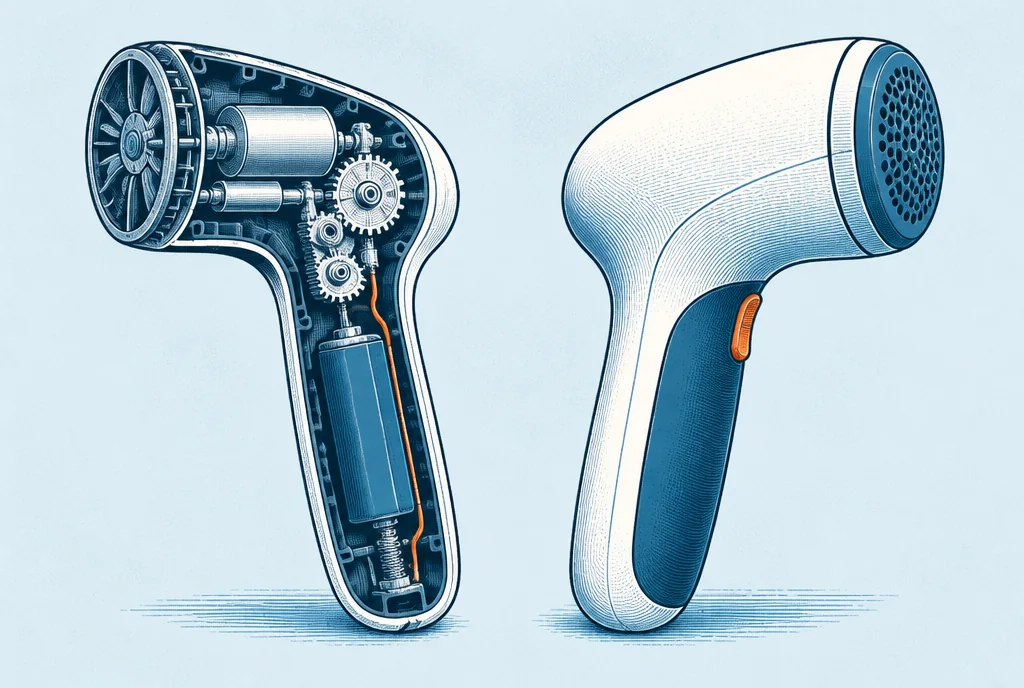
Identify the part competitors would need to copy
Imagine a desk accessory with a distinctive curved shell and a new internal dispensing mechanism. If a competitor can obtain the same functional benefit with a different shell, appearance-focused protection may not address the core commercial concern. If the appeal comes mainly from a recognizable ornamental design, the mechanism may be ordinary while the appearance deserves attention.
USPTO: Design patent application guide explains the U.S. design-patent framework and notes that utility and design protection can coexist where appropriate. WIPO: Patent frequently asked questions provides a broader international overview. This article helps organize the business question; it does not determine patentability or recommend a particular application.
Make two separate invention descriptions
- Functional description. Explain the problem, components, relationships and operating sequence. Identify what technical result changes.
- Appearance description. Identify the visual features you consider distinctive and how they appear across views.
- Dependency check. Ask which visual features are dictated by function and which reflect design choices. Legal treatment needs professional analysis.
- Copying scenario. Describe a plausible competing product and what aspect you want to prevent it from appropriating.
- Business lifespan. Consider how quickly the appearance or mechanism is likely to change.
Do not force the product into one category merely because you have a limited budget. First understand the available questions, then make a deliberate spending choice. A cheaper filing that does not address the valuable distinction can be poor value.
A hypothetical bottle-cap example
An inventor develops a cap with an unusual opening mechanism and a decorative faceted exterior. A competitor could potentially use the opening mechanism inside a smooth shell, or reproduce the faceted appearance with a conventional closure. These are different copying scenarios and should be discussed separately.
The functional packet would describe how the opening sequence works, what parts interact and what alternatives exist. The appearance packet would provide consistent views of the proposed design. Neither packet should claim that the other automatically covers all aspects of the product.
If the exterior changes during manufacturing to accommodate a different seal, that change may matter to the appearance strategy. If the mechanism changes during testing, it may matter to the functional disclosure. Keep both version histories visible rather than treating the patent work as a one-time label attached to the product name.
Compare practical preparation needs
| Question | Functional focus | Appearance focus |
|---|---|---|
| What must be explained? | How the invention operates | The ornamental design presented |
| What evidence helps? | Technical drawings and development detail | Consistent visual views |
| What change needs review? | New mechanism or relationship | Changed visible configuration |
| Common mistake | Benefits without implementation | Assuming the drawing protects every function |
Do not use provisional terminology loosely
The U.S. provisional application route is not available for design inventions, as explained in USPTO: Design patent application guide and the USPTO's related filing materials. Ask the practitioner to identify the actual route, required drawings and deadlines rather than requesting a generic “provisional patent” for everything.
A concept may also involve other forms of IP or no commercially useful registrable protection. Branding, confidential know-how and contracts address different interests. They should not be described as interchangeable substitutes simply because all fall under the phrase intellectual property.
Evaluate likely value before filing
Ask how easily a competitor could achieve the customer benefit through a different approach, whether copying would be visible, and how the protected feature connects to sales. These are business questions, not predictions of litigation outcomes. A practitioner can help connect them to the likely scope and limitations of a filing.
Consider your budget for the full process and the markets that matter. Avoid selecting countries or filing types because a promotional package includes them. Use the expected product life, sales channels and competitive behavior to frame a focused discussion.
Diagnose an unclear protection request
If you cannot explain what you want to protect without saying “the whole idea,” the next step is clearer technical and design documentation. If the only reason for a design filing is that it sounds cheaper, revisit whether it addresses the actual concern. If the appearance is still changing every week, ask how that affects timing and preparation.
Do not infer freedom to operate from either application type. Obtaining or applying for rights does not by itself clear other rights that may affect manufacture or sale. Keep commercialization clearance separate from the choice of protection strategy.
Your consultation packet
Prepare the two descriptions, current drawings, alternatives, disclosure history, target markets and copying scenarios. Ask for a recommendation tied to those facts and a clear explanation of what each proposed filing would and would not address.
This is educational U.S.-focused guidance, not legal advice. Other jurisdictions use different design-protection systems and procedures, so international plans require country-specific review.