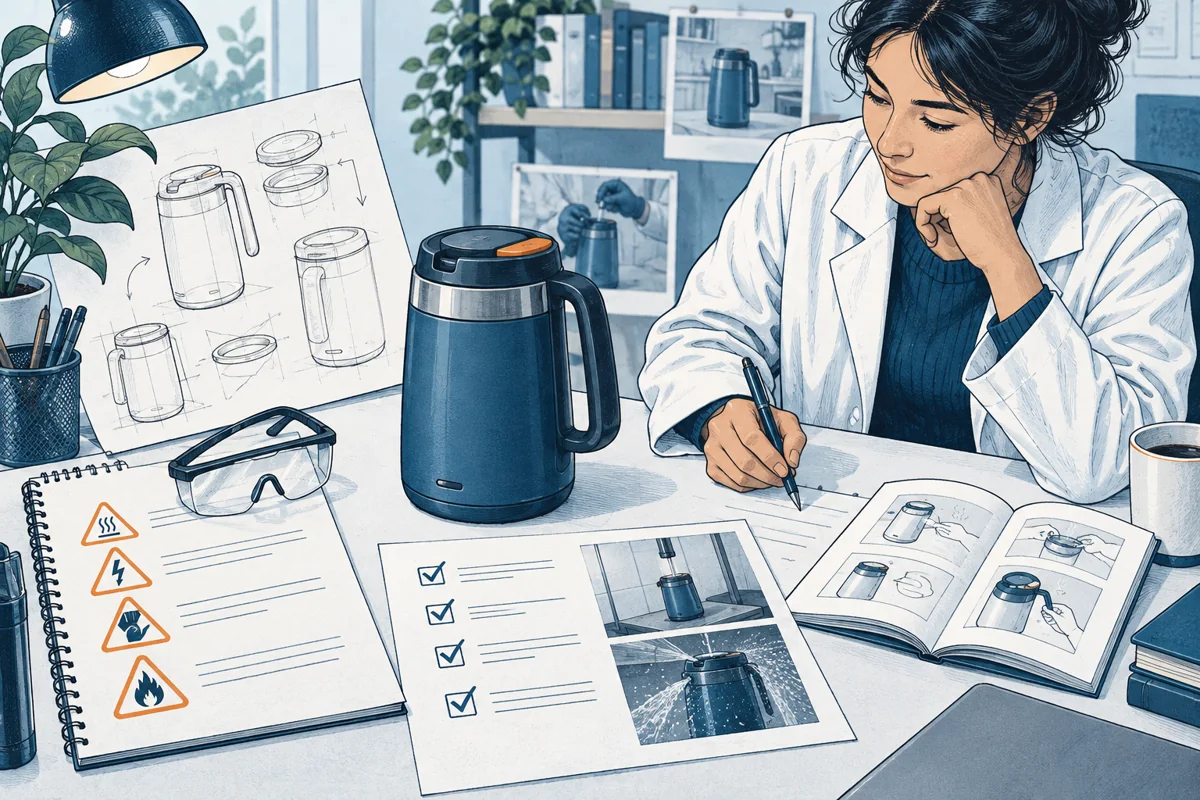
Start with a product description, not a testing quote
A laboratory cannot reliably scope “a smart accessory.” It needs to know what the device does, where people use it, who uses it, how it is powered and what foreseeable misuse could occur. Write a one-page description before asking for certification prices. Include photographs or a drawing, all operating modes, accessories, user age assumptions and the countries where you intend to distribute it.
Separate the initial version from planned features. A storage container, a powered container and a container advertised to sterilize medical instruments create different questions. An apparently small marketing change can alter the review needed. Do not copy the compliance list of a similar-looking product without checking whether its use and construction actually match yours.
Make a requirements register
For US consumer products, CPSC's small-business resources are a useful starting point. They are not a universal approval service for every invention. Product categories can involve other agencies and additional state, local or destination-market requirements. Ask a competent specialist to identify jurisdiction and explain the reasoning in writing.
Use a register with six columns: requirement, reason it applies, design feature affected, evidence needed, responsible person and unresolved question. Record the edition or revision used. A line that says “safety testing” is too broad to control a project; a scoped test plan tells you what sample, configuration and evidence are required.
Keep legal requirements, voluntary standards, retailer conditions and insurer requirements distinguishable. They can all affect a launch, but they are not interchangeable. If a distributor demands a particular report, ask whether it is a law, their contract condition or their preferred method of demonstrating compliance.
Match the evidence to the finished configuration
A certificate for a power supply does not automatically cover the appliance attached to it. A material report does not automatically cover a changed pigment, coating or supplier. Keep a bill of materials and a configuration identifier with the evaluation package. The sample sent to the laboratory should be traceable to the design you will manufacture.
Ask which changes trigger review before you order a cheaper substitute. Changes to a battery, enclosure, fastening method or firmware behavior may be relevant. The correct answer depends on the particular evaluation. A vendor's informal assurance should be recorded as an unresolved claim until the responsible evaluator confirms its scope.
CPSC's manufacturing best-practices guidance also emphasizes design and manufacturing controls alongside legal compliance. A one-time passing sample is not a substitute for maintaining the features that made it acceptable. Decide how production inspections will detect deviations that matter.
A worked example: the desk organizer with a charging feature
Imagine an inventor has validated demand for a mechanical desk organizer. Adding a powered charging compartment seems like an easy increase in value. The original customer research may still be useful, but the new feature introduces heat, electrical and compatibility questions that the unpowered version did not have.
Before tooling, the inventor creates two launch options. Option A is the unpowered organizer with clear dimensions and load limits established through suitable evaluation. Option B includes the charging feature and requires a specialist to scope the finished assembly. Neither option is assumed exempt from applicable rules; the comparison simply makes the added work visible.
Suppose, purely for planning, the powered version needs eight more weeks of evaluation and design work. That is an illustrative assumption, not a laboratory estimate. The decision is whether the expected customer benefit justifies that dependency. A compliance quote based on the actual design replaces the assumption before money is committed.
Budget for the work around the test
The laboratory invoice is only one line. Include sample construction, destructive samples where needed, shipping, technical documentation, possible design revisions, retesting, labeling review and ongoing production obligations. Ask what is included and which failures create additional charges. Request a written list of the information needed before the quoted schedule begins.
Do not promise a release date based solely on the first available test appointment. A failed test can reveal a design issue rather than a paperwork issue. Leave a decision point between evaluation and a large inventory order, so that corrective changes do not strand finished stock.
Your release decision packet
- Product description and intended-use boundaries approved by the responsible team.
- Requirements register with scope questions resolved or explicitly blocking release.
- Evidence tied to the production revision, materials and suppliers.
- Approved labels and instructions associated with the same revision.
- Production checks, complaint intake and traceability arrangements.
- A named person authorized to stop shipment when evidence is incomplete.
This is a planning method, not legal advice or a finding that a particular product is safe. The useful outcome is a documented route to a release decision. If the packet contains “the supplier says it is fine” where a scoped report belongs, the missing work is visible before customers receive the product.