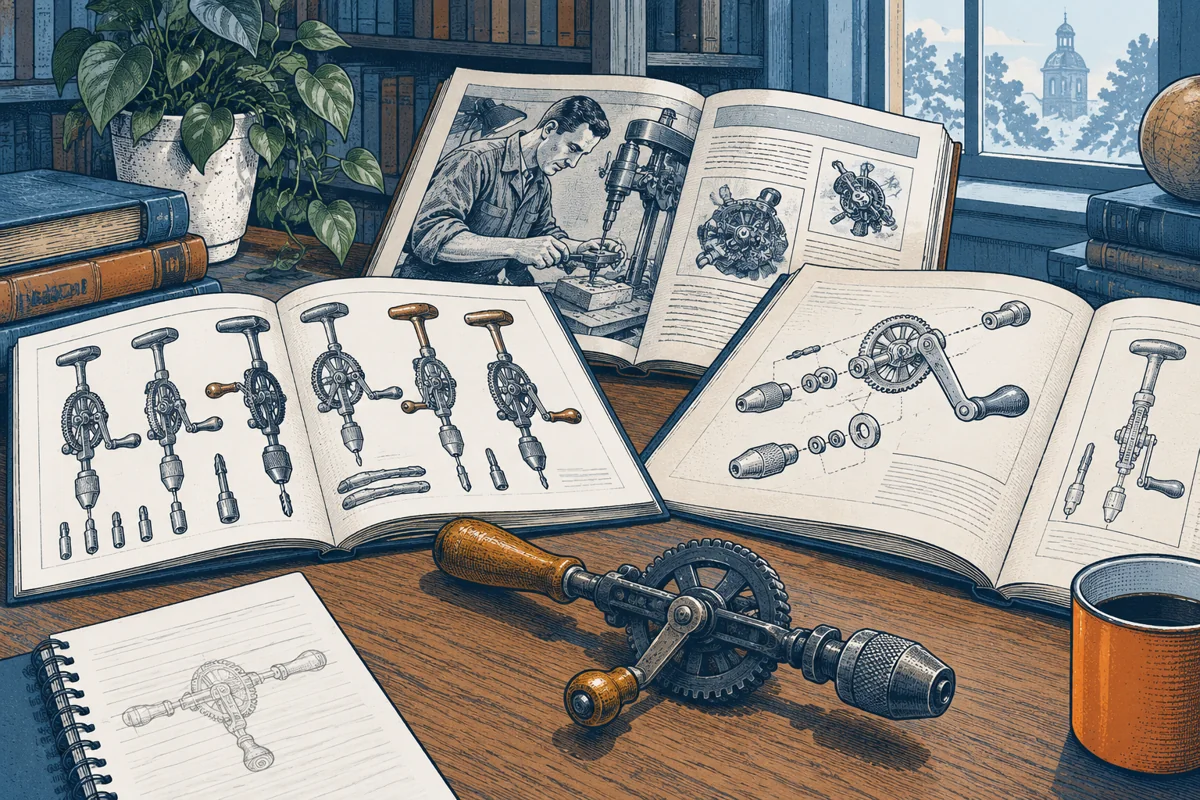
Why a patent-only search misses useful evidence
People disclose technical solutions in many places besides patent applications. A service manual may show the mechanism clearly. A trade catalog may document a product no longer sold. A conference paper may describe a process using terminology absent from your first patent search. These materials can help you understand the field and may be relevant to patentability.
USPTO: Multi-step patent search strategy explicitly includes non-patent literature in a broader search. WIPO: Patent frequently asked questions provides the general patent framework. This article focuses on finding and documenting material, leaving legal conclusions to a qualified, date-specific review.
Choose sources from the technical task
- Manufacturer documents. Search installation guides, service manuals, parts diagrams and archived catalogs.
- Research literature. Look for papers, theses and conference proceedings that describe the mechanism or process.
- Trade publications. Older industry magazines can reveal products and terminology missing from modern retail searches.
- Standards and handbooks. These can point to established techniques, while access and reuse restrictions must be respected.
- Videos and demonstrations. Record what is actually shown and the evidence for publication timing.
- Physical products. Preserve model numbers, manuals, packaging and reliable evidence of availability.
Search by function as well as product name. If the invention separates nested containers, try terms relating to dispensing, singulation, de-nesting and feeding. A packaging-machine manual may be more revealing than a search for your consumer product concept.
Keep content and date evidence separate
A PDF's creation timestamp is not necessarily its public release date. A webpage's current “updated” date may not establish when a particular drawing first appeared. A marketplace listing can be edited. Record exactly what each date means and avoid silently converting it into a publication date.
Save the URL, retrieval date, document title, edition, page numbers and any visible publication information. If an archive snapshot helps establish availability, preserve the snapshot link and note its limits. For important references, ask a practitioner what corroboration is needed rather than relying on a screenshot alone.
A hypothetical dispenser search
An inventor develops a spring-based dispenser for stacked craft materials. Patent searches find broad feeder mechanisms but no close consumer product. A search for “sheet singulation service manual” finds an older office-machine manual showing a related separator. The terminology differs, but the physical interaction is relevant.
The manual has a revision code but no clear publication date. The inventor records the technical pages and searches the model's catalog history. A dated distributor catalog identifies the model, but it does not reproduce the internal separator. The two records are useful together, yet they still require careful analysis of what was publicly available and when.
The inventor should not announce “this proves my idea cannot be patented.” Instead, the search packet states the similarities, unresolved dating issue and relevant pages. A practitioner can then evaluate the disclosure against proposed claims and the applicable legal framework.
Use a reference evidence sheet
| Field | What belongs there |
|---|---|
| Identity | Title, author or manufacturer, model and edition |
| Technical relevance | Specific mechanism and page or timestamp |
| Date evidence | Publication statement, catalog or archive evidence |
| Access | URL, library record or physical source |
| Limitations | Missing pages, uncertain date or incomplete explanation |
Search adjacent industries and older language
Technical ideas migrate. A clamping method used in agriculture may resemble a workshop fixture. A dispensing mechanism may appear in industrial equipment decades before a household application. Follow the underlying function without assuming that a different intended use makes the technical disclosure irrelevant.
Older catalogs may use obsolete brand names or descriptive vocabulary. Extract terms from one useful source and search them in combination with the mechanism. Librarians and patent resource centers can help locate materials that ordinary web search does not expose. Keep the search bounded and document areas you could not access.
Avoid evidence inflation
A photograph that shows an exterior may not disclose the hidden mechanism you infer. A paper's title may sound relevant while its actual method differs. A forum comment may mention a concept without enough detail to support your interpretation. Record what the source demonstrates, not what you imagine it must contain.
Likewise, ten copies of the same manual are not ten independent disclosures. Group duplicate editions and note substantive revisions. A clean record is more useful than a long bibliography filled with repeated or weakly related links.
The finished output
Prepare a shortlist of the strongest references, each with technical excerpts identified by location, date evidence and open questions. Keep this separate from any freedom-to-operate review: an old manual can be important prior art without identifying every active patent affecting a modern product.
This is educational research guidance, not legal advice. It helps you collect reliable material and avoid false confidence, but it does not determine the legal effect of any particular publication.