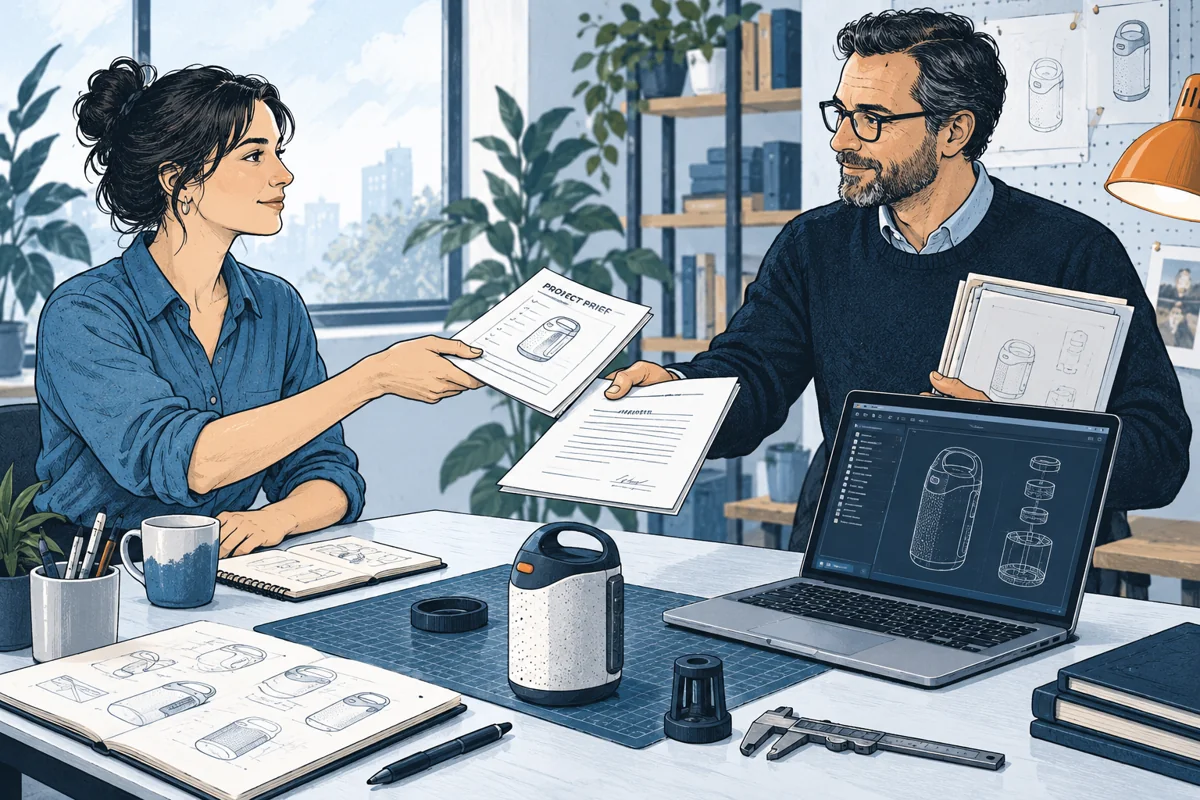
Separate what you receive from what you own
A contractor may deliver a prototype, a PDF drawing and a set of manufacturing files. That does not by itself answer who owns patent rights, reusable software, design assets or process know-how. Physical possession and payment are facts in the relationship, but the legal rights require their own analysis.
USPTO: Managing a patent explains patent ownership and assignment at a general U.S. level. USPTO: MPEP 2109, Inventorship addresses inventorship. Use those distinctions to prepare a clear engagement brief; do not use this article as a contract or a determination of ownership.
Inventory the inputs before work starts
- Your existing material. Identify sketches, prototypes, code and technical disclosures you bring to the project.
- The contractor's background material. Ask what existing tools, libraries, designs or methods they expect to use.
- Third-party material. Identify components, licensed software and other resources with separate terms.
- New project outputs. Define the drawings, source files, prototypes, reports and documentation to be delivered.
- Expected development. Clarify whether the contractor merely implements a defined design or will solve open technical problems.
- Required future uses. Explain whether you need to manufacture, modify, license, transfer or obtain maintenance elsewhere.
The last point is critical. A right adequate for testing one prototype may be inadequate for commercial production. Tell counsel the intended business use so the agreement can address it rather than simply saying “client owns the work.”
A hypothetical engineering engagement
An inventor hires an engineer to turn a rough feeder concept into a working prototype. The engineer uses a pre-existing control library and devises a new anti-jam mechanism. The final device works, and the inventor receives a video and a compiled firmware file.
Three issues are now mixed together. The inventor needs editable source files for future maintenance. The control library may be background IP requiring a suitable license. The anti-jam mechanism may raise inventorship and ownership questions. A paid invoice does not clearly answer any of them by itself.
A better engagement would identify the library, required source access, project-specific outputs and the treatment of new developments before work begins. As technical contributions emerge, the parties would document them and obtain appropriate advice rather than deciding inventorship based on who paid more.
Define deliverables precisely
| Deliverable | Question to resolve |
|---|---|
| CAD | Native editable files, exchange files or both? |
| Firmware | Source, build instructions and dependency terms? |
| Prototype | Ownership, shipping and remaining components? |
| Test results | Raw data, method and version tested? |
| Manufacturing package | Drawings, tolerances and supplier information? |
| New IP | Assignment, license and further-assistance obligations? |
Track contributions during development
Keep dated meeting notes describing technical problems, proposed solutions and who contributed them. Ask participants to correct inaccuracies promptly. The record should describe facts, not attempt to award legal inventorship informally. A patent practitioner evaluates inventorship in relation to the claimed invention.
Do not exclude a contributor merely because they are paid, and do not add someone merely as a reward or courtesy. Ownership can be arranged through appropriate legal mechanisms, while inventorship is a different question. Confusing the two can make a later filing or transaction more difficult.
Plan for an incomplete or ended engagement
Specify what happens if the project stops midway: which completed files are delivered, how payment disputes affect delivery, what licenses remain available and how confidential information is handled. A prototype that only its original contractor can modify can become an expensive dependency.
Ask for a handoff milestone before the final payment where appropriate under the agreement. Verify that files open, dependencies are identified and documentation matches the delivered version. This is a practical acceptance check, not a substitute for the legal transfer of rights.
Watch for weak assumptions
- “Work for hire” is used casually as if it settles every type of IP.
- The contractor promises ownership but reserves undefined background technology.
- Only flattened drawings or compiled software are delivered.
- Subcontractors contribute without a clear rights chain.
- The NDA is treated as the ownership agreement.
- Important improvements appear after the original scope but no terms are revisited.
The engagement packet
Prepare the input inventory, deliverable schedule, intended uses, contribution process and exit requirements. Have qualified counsel draft or review the legal terms before substantial work. If work has already started, assemble the existing agreements and records and resolve gaps before making ownership promises to a buyer or licensee.
This is educational guidance, not legal advice. Contract, patent, copyright and employment rules can differ, and cross-border development requires jurisdiction-specific review.